- Science news
- Featured news
- How dugongs dive and which wolves defend territories: Here are Frontiers’ photo highlights of the month
How dugongs dive and which wolves defend territories: Here are Frontiers’ photo highlights of the month
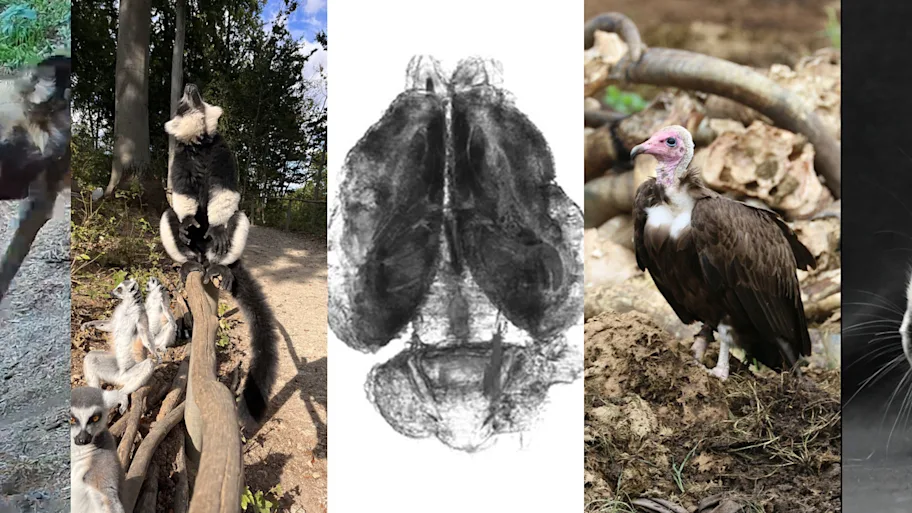
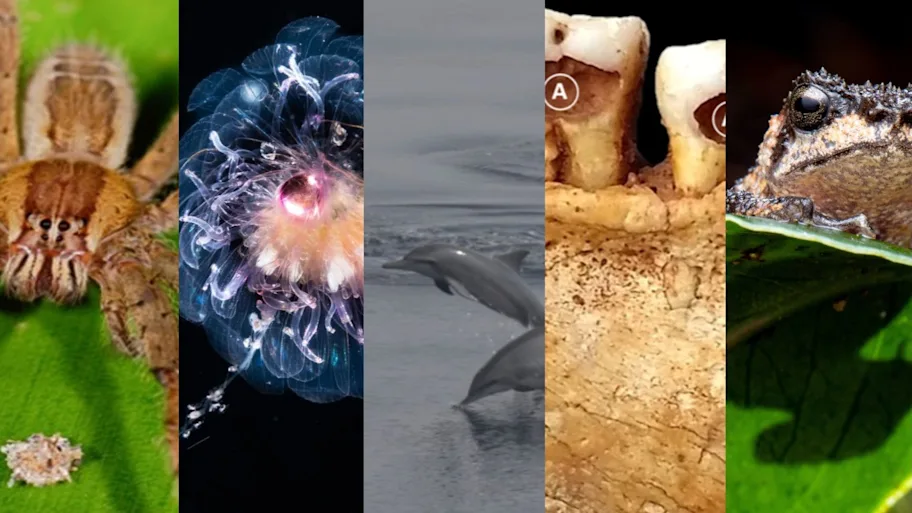
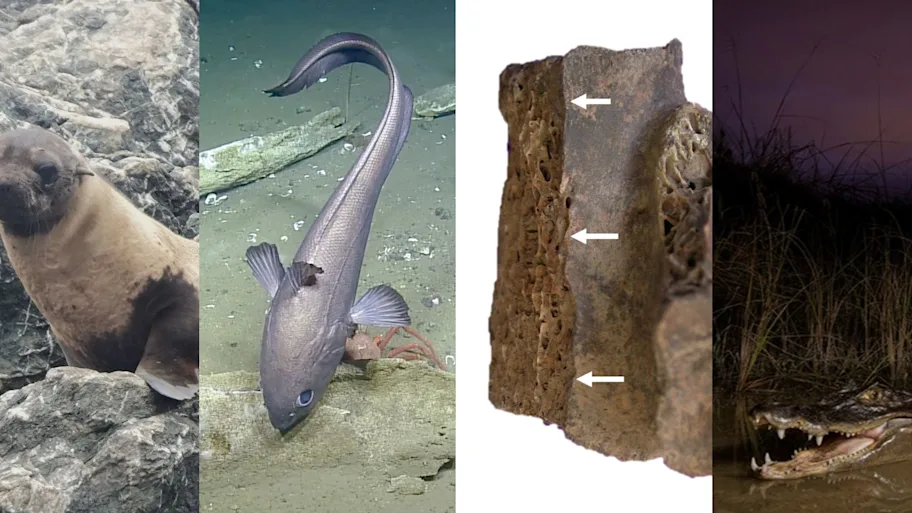
At Frontiers, we bring some of the world’s best research to a global audience. But with tens of thousands of articles published each year, it’s impossible to see all that research in the same way scientists do. Here are some images that showcase some of the newest findings published in the last month.
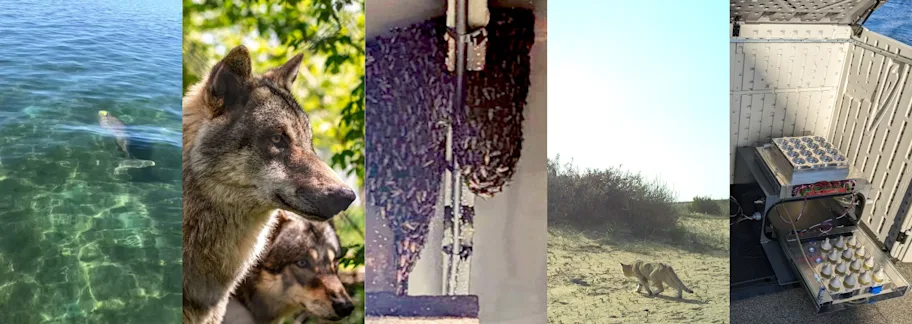
Study shows how dugongs regulate how they float, rise, and sink during shallow-water dives
Dugongs need to breathe air but forage underwater, so they must maximize the time they spend underwater by performing hundreds of short and shallow dives daily. Controlling their buoyancy – the upward force exerted by water against a body in it – is especially important for dugongs, who have large lungs relative to their body size, a feature that adds to buoyancy. Now, in a new Frontiers in Marine Science article, scientists found evidence that dugongs adjust how much air they inhale before dives, which helps them control their buoyancy. When diving deep, they breathe in deeper and swim harder early in their dives to avoid floating back to the surface. When performing shallow dives, they inhale less air which reduces the force pushing them back to the surface – an energy-saving strategy.
Video: Dugong in Exmouth Gulf, western Australia, equipped with suction-cup multi-sensor tags that collect information on dugong kinematics. Analysis of dugong kinematics in relation to diving depth revealed that dugongs adjust the amount of air they inhale according to how deep they dive. Credit: Renae Lambourne.
Full article: https://www.frontiersin.org/journals/marine-science/articles/10.3389/fmars.2026.1796201/full
Breeding gray wolves more territorial against intruders
Gray wolves communicate and learn about their environment through smell. Signals are, among other things, delivered via urine and feces and contain vital information about reproduction, social interaction, and territorial defense. Now, in a Frontiers in Ethology study, scientists have stocked scent stations with the urine of a wolf that wasn’t part of a zoo-housed pack, effectively mimicking the scent of an intruder. Results showed that breeding wolves responded more to the ‘intruder’ than non-breeding wolves. The most common responses of breeding wolves were sniffing (73%) and marking behaviors like rubbing against scent stations (20%) and urination and defecation (3%). Non-breeders primarily showed sniffing behaviors (96%) and minimal marking.
Video: A breeding female exhibits scent-rolling against the fence in front of the scent station where urine from a conspecific is deposited, while the breeding male briefly investigates by sniffing. Credit: Giada Studer
Full article: https://www.frontiersin.org/journals/ethology/articles/10.3389/fetho.2026.1815859/full
Invasive giant honey bees with Tropilaelaps mites caught hitchhiking on ship
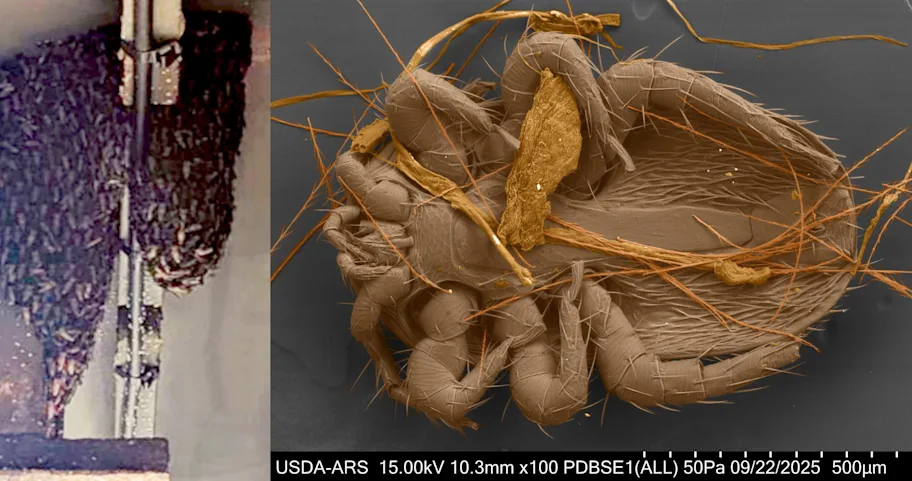
Giant honey bees, native to south and south-east Asia, are invasive in many other parts of the world. Now, writing in Frontiers in Insect Science, researchers in the US have described what is thought to be the first interception of a swarm comprising several hundred individuals on a US-bound ship. The team found the bees were infested with two distinct species of mites – including Tropilaelaps, a pest of significant concern in beekeeping – and several viruses. This confirms that invasive bee swarms can harbor parasitic mites and pathogens, some of which haven’t yet been documented in the US but could be dangerous or deadly to honey bees and native bees.
Full article: https://www.frontiersin.org/journals/insect-science/articles/10.3389/finsc.2026.1829350/full
Elusive sand cats spotted for the first time in Qatar after extinction rumors
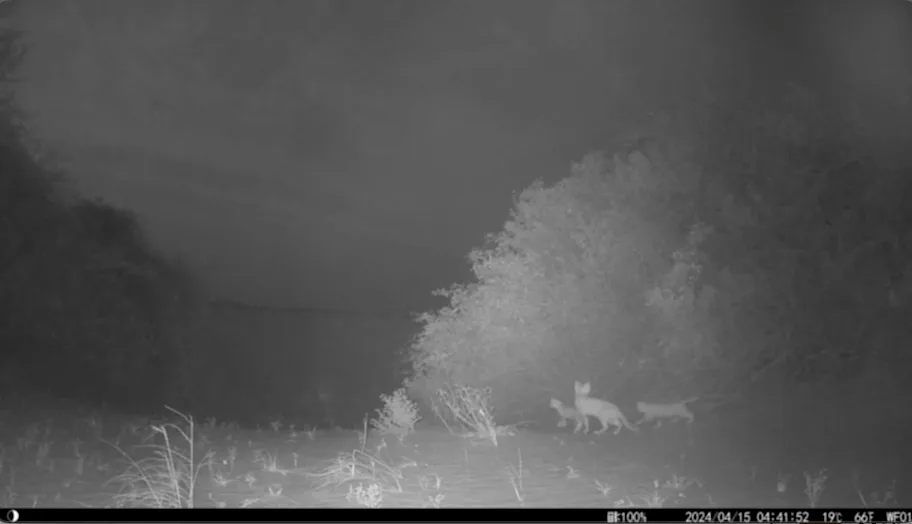
Among small cats, sand cats are uniquely adapted to living in the desert. There is much that isn’t known about the species, which is listed as threatened, including the current extent of its historic range. But now, after years of camera-trapping at four sites in Qatar, researchers have found proof that the elusive cats are living and breeding in at least one of the country’s nature reserves. They captured over 400 sand cat photos at 16 camera trap locations in the Al-Ureiq Reserve, which has emerged as a stronghold for the species. The results were published in Frontiers in Conservation Science.
Full article: https://www.frontiersin.org/journals/conservation-science/articles/10.3389/fcosc.2026.1746427/full
eDNA auto sampler could make tracking salmon migration easier
Pacific salmon are of great commercial and cultural importance and play a significant role in the ecosystems they inhabit. Tracking their migration is key to monitoring salmon communities. Using environmental DNA (eDNA) is one way of tracing their route from colder marine environments to warmer freshwater bodies, where they spawn. Now, researchers deployed a first-generation prototype eDNA autosampler in Washington state to track adult salmon migrations at fine temporal resolution. This was achieved by collecting day and night eDNA samples over four months. The study was published in Frontiers in Ecology and Evolution.

Full article: https://www.frontiersin.org/journals/ecology-and-evolution/articles/10.3389/fevo.2026.1824094/full
REPUBLISHING GUIDELINES: Open access and sharing research is part of Frontiers’ mission. Unless otherwise noted, you can republish articles posted in the Frontiers news site — as long as you include a link back to the original research. Selling the articles is not allowed.